Electric Wire Rope Winch
Description
Electric Wire Rope Winch Manufacturer – Balaji Crane Private Limited
Electric Wire Rope Winch
An Electric Wire Rope Winch is an industrial lifting and pulling device designed to move, lift, lower, and position heavy loads using a motor-driven drum and steel wire rope. It is widely used in manufacturing plants, construction sites, warehouses, engineering workshops, and material handling operations where controlled load movement is essential.
Balaji Crane Private Limited provides industrial crane and material handling solutions for diverse applications. Electric wire rope winches are suitable for applications requiring reliable pulling force, controlled movement, and efficient handling of heavy materials.
Powered by an electric motor, an electric wire rope winch rotates a drum to wind or unwind the wire rope. Depending on the design, it can be equipped with a gearbox, braking system, control panel, and limit switches to support safe and controlled operation.
What Is an Electric Wire Rope Winch?
An electric wire rope winch is a motorized mechanical device that uses a steel wire rope wound around a rotating drum to pull or move loads. Depending on its configuration and approved application, it may also be designed for lifting and lowering loads.
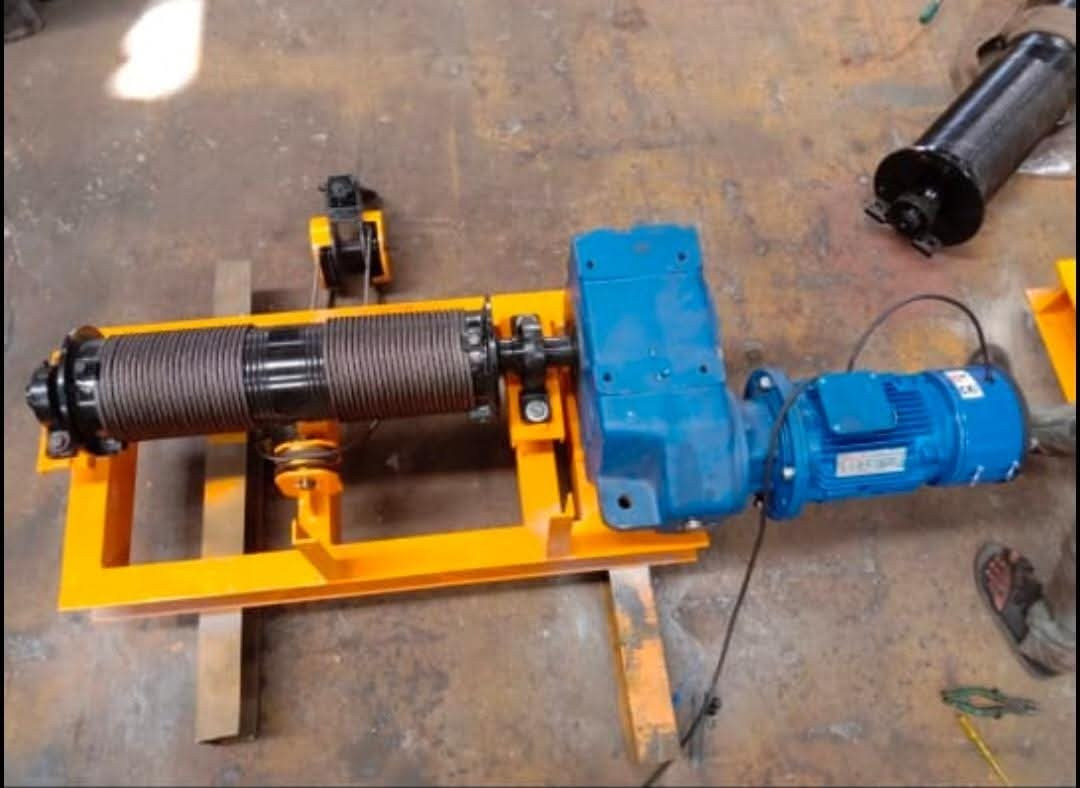
The winch typically consists of an electric motor, gearbox, rope drum, wire rope, braking arrangement, and control system. Additional components, such as rope guides, sheaves, and overload protection, may be included according to the application.
Electric wire rope winches are available in different capacities, drum sizes, rope lengths, and operating speeds to meet specific industrial requirements.
Working Principle of an Electric Wire Rope Winch
An electric wire rope winch works by converting electrical energy into mechanical rotational force.
1. Electric Motor Activation: The motor receives a command from the control system and generates rotational power.
2. Gearbox Operation: The gearbox reduces motor speed and increases the torque available at the drum.
3. Wire Rope Winding: The drum rotates to wind the wire rope and pull or lift the connected load, depending on the system configuration.
4. Controlled Movement: The operator controls the direction and speed of movement using the designated control system.
5. Braking and Stopping: The braking mechanism stops movement and holds the load when the system is correctly designed for that purpose.
6. Rope Unwinding: Reversing the drive allows the rope to unwind for controlled lowering or release, as permitted by the winch design.
For lifting applications, the winch must be specifically rated for lifting and fitted with suitable braking and safety systems. A pulling-only winch should not be used for overhead lifting.
Key Features and Benefits
- Motorized Operation: Supports efficient load movement with reduced manual effort.
- High Pulling Force: Available in different capacities for industrial pulling requirements.
- Controlled Movement: Provides controlled winding and unwinding of the wire rope.
- Gearbox-Driven Performance: Helps deliver the torque required for the specified application.
- Robust Construction: Designed for suitable industrial operating conditions.
- Braking System: Helps control movement and hold loads when appropriately specified.
- Flexible Configuration: Available with different rope lengths, drum sizes, motor ratings, and speeds.
- Remote or Pendant Control: Can be configured with suitable controls according to operational needs.
- Industrial Versatility: Suitable for compatible pulling, positioning, and lifting applications.
Types of Electric Wire Rope Winches
1. Single Drum Electric Wire Rope Winch
Uses one primary drum to wind and unwind the wire rope. It is suitable for many industrial pulling and positioning applications, depending on the rated design.
2. Double Drum Electric Wire Rope Winch
Uses two drums for applications requiring separate rope arrangements or coordinated pulling operations. Its suitability depends on the load arrangement and winch design.
3. Heavy-Duty Electric Wire Rope Winch
Designed for demanding industrial applications requiring higher pulling forces or specific operating duties. Motor, gearbox, rope, drum, and braking components must be selected for the intended load.
Technical Specifications of Electric Wire Rope Winch
The following parameters should be considered when selecting an electric wire rope winch. Actual values depend on the model and application.
Technical Parameter Details
Product Name Electric Wire Rope Winch
Power Source Electric motor
Drive System Motor and gearbox
Rated Capacity Application- and model-dependent
Operating Speed Based on motor, gearbox, and drum design
Wire Rope Type Selected according to load and application
Wire Rope Diameter Based on load rating and design calculations
Rope Length As required for the application
Drum Design Based on rope capacity and winding arrangement
Braking System Suitable for the intended duty
Control System Pendant, push-button station, or compatible remote control
Power Supply According to motor specifications
Mounting Arrangement Application-dependent
Main Applications Industrial pulling, positioning, or rated lifting operations
Important: Final selection should consider rated line pull, number of rope layers, effective drum diameter, duty cycle, rope safety factor, braking capacity, and applicable standards. For lifting applications, verify the rated lifting capacity and all required safety devices.
Applications of Electric Wire Rope Winches
Electric wire rope winches are used in various industries, including:
1. EOT Crane and Gantry Crane Systems
2. Industrial Material Handling
3. Construction and Infrastructure Projects
4. Steel and Metal Fabrication Plants
5. Engineering and Manufacturing Workshops
6. Warehouses and Logistics Facilities
7. Industrial Equipment Positioning
8. Machinery Installation and Maintenance
9. Shipyards and Marine Applications with suitably rated equipment
10. Heavy-Duty Industrial Pulling Operations
The correct winch configuration depends on the type of load, required pulling force, travel distance, rope routing, operating speed, and working environment.
Why Choose Balaji Crane Private Limited?
Balaji Crane Private Limited supports industrial crane and material handling requirements with a focus on appropriate equipment selection and reliable operation.
Selecting the right electric wire rope winch can help businesses achieve:
- Efficient movement of heavy materials
- Controlled pulling and positioning operations
- Compatibility with the intended drive system
- Suitable braking and control arrangements
- Better maintenance planning and operational reliability
When selecting a winch, provide the required load capacity or line pull, rope length, operating speed, duty cycle, power supply, and whether the application involves pulling or vertical lifting.
Frequently Asked Questions (Q&A)
Q1. What is an electric wire rope winch?
An electric wire rope winch is a motor-driven device that uses a rotating drum and steel wire rope to pull, move, position, or lift loads when specifically designed and rated for the intended application.
Q2. How does an electric wire rope winch work?
An electric motor drives a gearbox that rotates the rope drum. The drum winds or unwinds the wire rope to move the connected load in the required direction.
Q3. What is the difference between a wire rope winch and a wire rope hoist?
A wire rope winch is commonly used for pulling and positioning, although some models are designed for lifting. A wire rope hoist is specifically designed for lifting and lowering suspended loads under its rated operating conditions.
Q4. What factors determine the capacity of an electric wire rope winch?
Capacity depends on the rated line pull, rope arrangement, drum diameter, gearbox torque, motor power, duty cycle, braking system, and the manufacturer's design limits.
Q5. Can an electric wire rope winch be used for vertical lifting?
Only if the winch is specifically designed, certified or otherwise approved as applicable, and rated for lifting. It must have suitable brakes, rope arrangements, and required safety devices. A pulling-only winch must not be used for suspended loads.