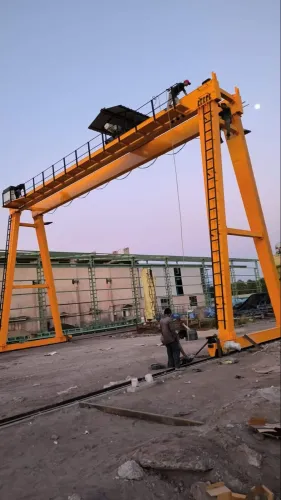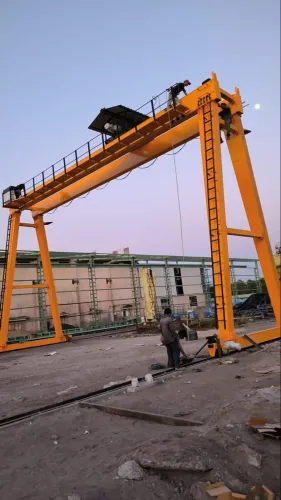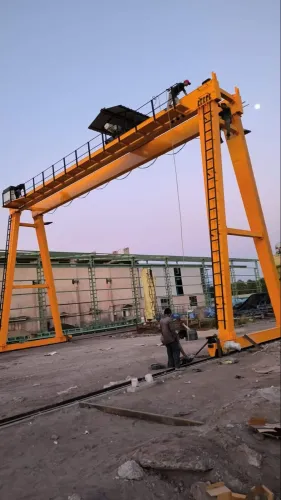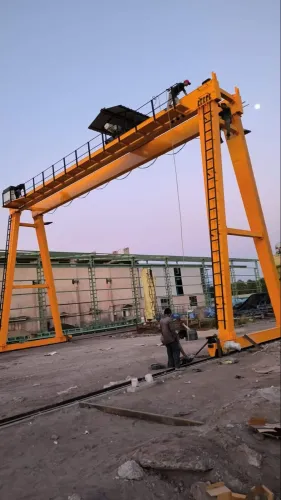
JIB Crane Manufacturer in Ahmedabad, Gujarat, India – Balaji Crane Private Limited
Industrial JIB Cranes for Efficient Material Handling
Balaji Crane Private Limited offers industrial crane and material handling solutions for businesses that require efficient lifting and movement of materials within a defined working area. JIB cranes are widely used in manufacturing plants, engineering workshops, assembly lines, warehouses, fabrication units, machine shops, and industrial maintenance departments.
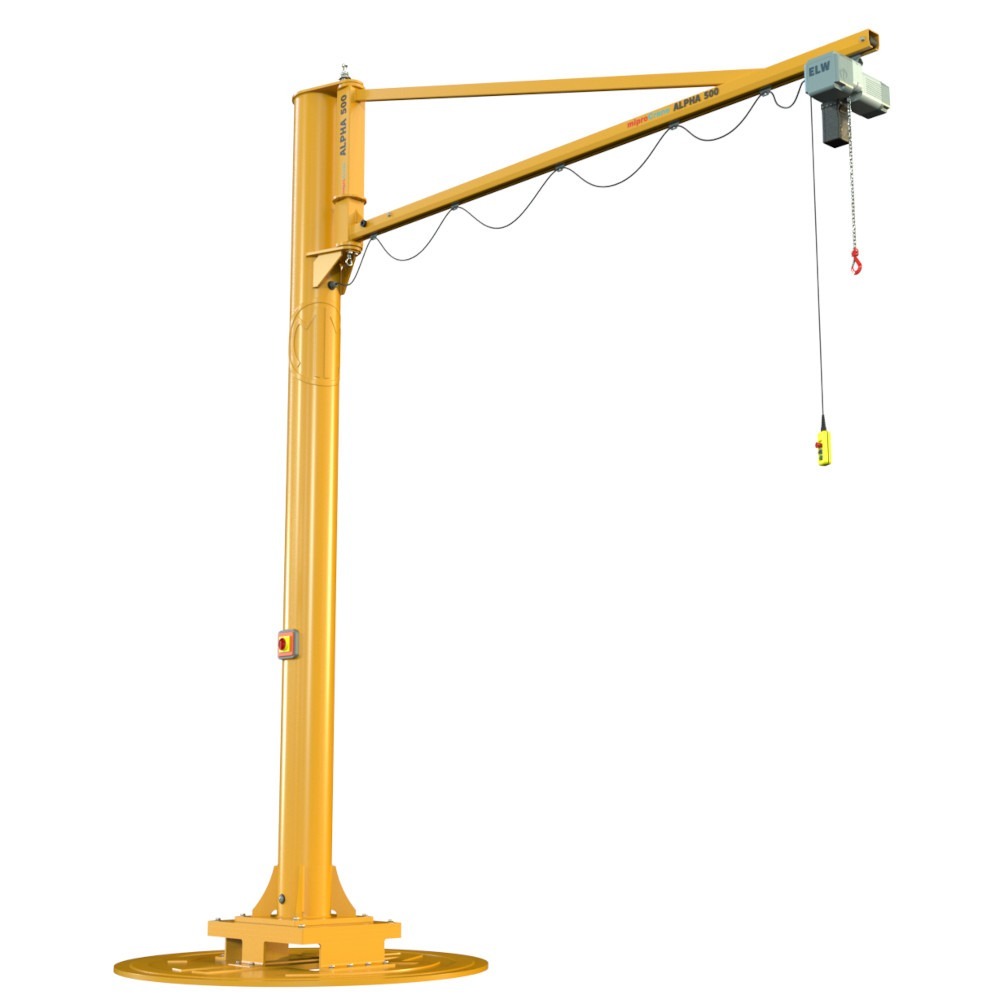
A JIB crane is a compact lifting system consisting of a horizontal or angled jib arm mounted on a pillar or wall. A hoist and trolley arrangement moves loads along the jib arm, while the crane's rotating mechanism allows materials to be positioned within its designated working radius.
JIB cranes help simplify repetitive lifting operations, reduce manual material handling, and improve workstation productivity. Depending on the application, they can be designed with suitable lifting capacity, boom length, rotation angle, lifting height, and hoisting mechanism.
Balaji Crane Private Limited can be approached for project-specific JIB crane requirements in Ahmedabad, Gujarat, and other locations according to the agreed project scope.
What Is a JIB Crane?
A JIB crane is a type of lifting equipment designed to handle materials within a localized working area. It generally consists of a supporting pillar or wall-mounted bracket, a projecting jib arm, a hoist, a trolley, and a suitable control system.
The hoist raises and lowers the load, while the trolley travels along the jib arm to position it horizontally. Depending on the crane design, the jib arm may rotate manually or through a powered mechanism.
JIB cranes are particularly useful at individual workstations where materials need to be lifted repeatedly between machines, assembly stations, storage racks, or loading points.
Types of JIB Cranes
1. Pillar-Mounted JIB Crane
This crane is supported by a dedicated pillar or column and is suitable for workstations that require localized lifting and rotation. The foundation and supporting structure must be designed for the applied loads and overturning forces.
Applications: machine shops, production lines, assembly areas, and maintenance stations.
2. Wall-Mounted JIB Crane
A wall-mounted JIB crane is attached to a suitably engineered wall, column, or supporting structure. It can be a practical option when floor space needs to remain clear.
Applications: workshops, production bays, and machine servicing areas with suitable structural support.
3. Articulating JIB Crane
An articulating jib crane uses a jointed boom arrangement that can help position loads around selected obstacles and within more complex workstation layouts.
Applications: confined work areas, equipment servicing, and specialized assembly operations.
4. Powered Rotation JIB Crane
This configuration uses a powered mechanism to rotate the jib arm. It may be suitable for applications that require frequent rotation or more controlled positioning.
Applications: repetitive production handling and selected industrial workstations.
Key Features of Industrial JIB Cranes
- Compact Design: Suitable for localized lifting operations where a full overhead crane may not be necessary.
- Workstation Material Handling: Supports movement between machines, worktables, and nearby handling points.
- Rotating Boom: Provides access to a defined working area, depending on the rotation design.
- Electric Hoisting Options: Can be equipped with a suitable electric chain hoist or wire rope hoist.
- Manual or Powered Rotation: The rotation mechanism can be selected according to operational needs.
- Floor Space Optimization: Wall-mounted designs can help preserve usable floor space.
- Customized Boom Length: The jib arm can be designed to suit the required reach and working area.
- Suitable Control Options: Pendant or other compatible control systems may be specified.
- Safety Provisions: Appropriate brakes, limit switches, and other protective devices can be included according to the design and applicable requirements.
Technical Specifications of JIB Cranes
The following table outlines common design parameters. Final specifications depend on the selected model, application, and engineering assessment.
Technical Parameter Specification / Design Options
Crane Type Pillar-Mounted, Wall-Mounted, Articulating, or Powered Rotation
Safe Working Load (SWL) Selected according to the required lifting load
Jib Arm Length Customized according to the required reach
Lifting Height Based on hook travel and available headroom
Rotation Angle Fixed, partial rotation, or wider rotation as permitted by the design
Hoisting Mechanism Electric Chain Hoist or Electric Wire Rope Hoist, as suitable
Trolley Movement Manual or powered, depending on the configuration
Rotation Mechanism Manual or powered
Mounting Arrangement Floor-mounted pillar or suitable structural mounting
Control System Pendant or compatible control arrangement
Power Supply Finalized according to the selected hoist and drive equipment
Structural Design Based on load, reach, duty, and support conditions
Safety Features Suitable braking, limit, and protective devices
Note: Lifting capacity, boom length, rotation angle, and mounting requirements should be confirmed for the specific crane. A qualified engineering assessment is necessary to verify the foundation or supporting structure.
Working Principle of a JIB Crane
A JIB crane works through the combined operation of its hoist, trolley, and rotating jib arm.
1. Load Attachment: The operator connects the load to a suitable hook or approved lifting attachment.
2. Vertical Lifting: The hoist raises the load to the required height.
3. Horizontal Positioning: The trolley moves along the jib arm to position the load.
4. Jib Rotation: The arm rotates manually or through a powered drive, depending on the configuration.
5. Load Placement: The operator lowers the load carefully into the designated position.
The load must remain within the crane's rated capacity and approved working area. Side pulling, uncontrolled swinging, and lifting loads beyond the specified reach or capacity must be avoided.
Applications of JIB Cranes
JIB cranes are used in a variety of industries for repetitive, localized lifting operations.
1. Manufacturing Industries: Handling raw materials, components, and finished products near production equipment.
2. Engineering Workshops: Moving machine parts, tools, and assemblies.
3. Automobile Industries: Supporting component handling at selected assembly and service stations.
4. Fabrication Units: Positioning metal parts and fabricated components.
5. Machine Shops: Loading and unloading components from machine tools.
6. Warehouses: Handling goods in designated loading or packing zones.
7. Maintenance Departments: Lifting equipment parts during repair and servicing.
8. Packaging Units: Moving materials between nearby processing and packing stations.
9. Assembly Lines: Supporting repetitive component movement between workstations.
10. Industrial Plants: Improving handling efficiency in areas where loads travel over a limited radius.
Benefits of Installing a JIB Crane
1. Improved Workstation Productivity
JIB cranes simplify repetitive lifting tasks and help move materials efficiently between nearby work areas.
2. Reduced Manual Lifting
A suitable crane reduces the need for workers to manually lift heavy components, supporting better material handling practices.
3. Efficient Use of Floor Space
Wall-mounted JIB cranes can keep the floor area beneath the working zone relatively clear, subject to the installation design.
4. Accurate Load Positioning
The hoist, trolley, and rotating boom allow operators to position loads within the crane's designated working envelope.
5. Flexible Installation Options
Pillar-mounted and wall-mounted configurations provide alternatives for different building layouts and workstation requirements.
6. Application-Specific Design
Boom length, lifting capacity, rotation, and hoisting options can be selected to suit the intended operation.
Why Choose Balaji Crane Private Limited for JIB Cranes?
Balaji Crane Private Limited can be contacted for industrial crane and material handling requirements involving localized lifting applications.
- Guidance on selecting a suitable JIB crane configuration.
- Project-specific consideration of lifting capacity and boom reach.
- Selection of a suitable hoist and trolley arrangement.
- Consideration of mounting, rotation, and operating requirements.
- Attention to appropriate safety provisions and installation conditions.
For a JIB crane enquiry, share the maximum load weight, required boom length, lifting height, rotation angle, mounting preference, and operating frequency.
Frequently Asked Questions (Q&A) About JIB Cranes
Q1. What is a JIB crane used for?
A JIB crane is used for lifting and positioning materials within a localized working area. It is commonly installed near machinery, assembly stations, fabrication areas, and maintenance workstations.
Q2. What are the main types of JIB cranes?
Common types include pillar-mounted, wall-mounted, articulating, and powered-rotation JIB cranes. The suitable type depends on the required reach, working area, mounting conditions, and frequency of use.
Q3. What is the difference between a pillar-mounted and a wall-mounted JIB crane?
A pillar-mounted JIB crane is supported by a dedicated column and foundation or engineered base. A wall-mounted JIB crane is attached to a suitably designed wall or structural column and may preserve floor space.
Q4. What is the lifting capacity of a JIB crane?
The lifting capacity depends on the crane's engineered design, boom reach, mounting arrangement, and hoisting equipment. The rated capacity must be confirmed for the specific model and configuration.
Q5. Can a JIB crane rotate?
Yes. Depending on its design, a JIB crane can have a limited rotation angle or a wider rotational range. The permitted rotation must be confirmed against the crane's design and installation conditions.
Q6. Which hoist is used in a JIB crane?
An electric chain hoist or electric wire rope hoist may be selected according to the required load, lifting height, duty, available headroom, and operating frequency.
Q7. Can a JIB crane be installed in a small workshop?
Yes, if there is sufficient clearance and the supporting structure or foundation can safely accommodate the crane loads. The design must also allow safe movement of the load and operation of the hoist.
Q8. What is the purpose of the trolley in a JIB crane?
The trolley moves the hoist horizontally along the jib arm, allowing the operator to position the load within the crane's designated working area.
Q9. What safety features should a JIB crane have?
Depending on the design and applicable requirements, safety provisions may include hoist brakes, limit switches, overload protection where appropriate, secure mounting, rated lifting accessories, and suitable electrical protection.
Q10. Can a JIB crane be customized?
Yes. JIB cranes can be designed around the required lifting capacity, boom length, lifting height, rotation angle, hoist type, and mounting arrangement.
Keywords